The Premier League’s set piece revolution
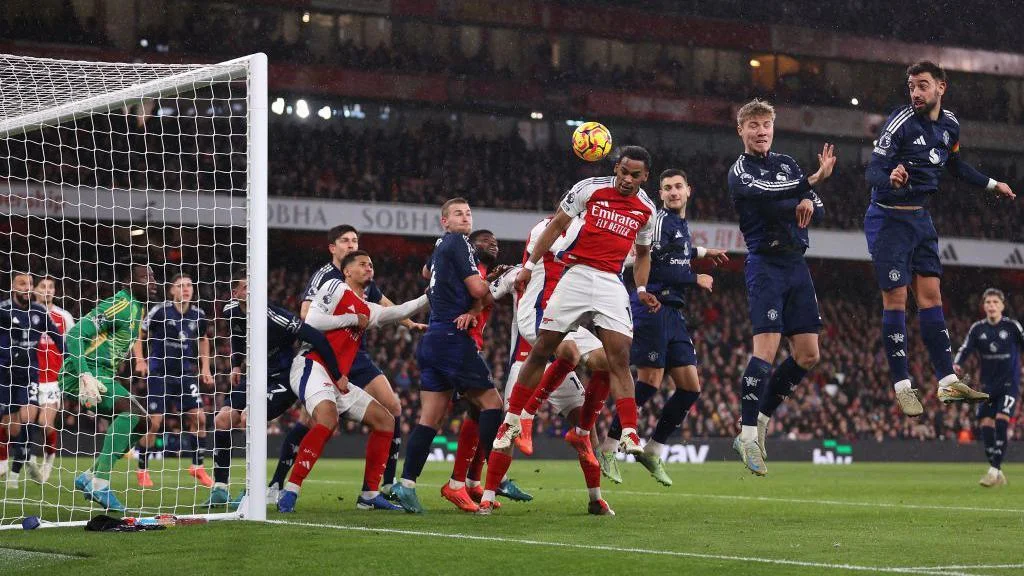
There’s one Premier League tactical trend that has captured the attention of fans and football analytics professionals alike this season: the explosion of set piece goals, spearheaded by current table leaders and title favorites Arsenal. In this post, we will dive into the specifics of how this is happening and what other consequences it’s having on the game, using our advanced performance metrics.
The new normal: the explosion of set piece xG
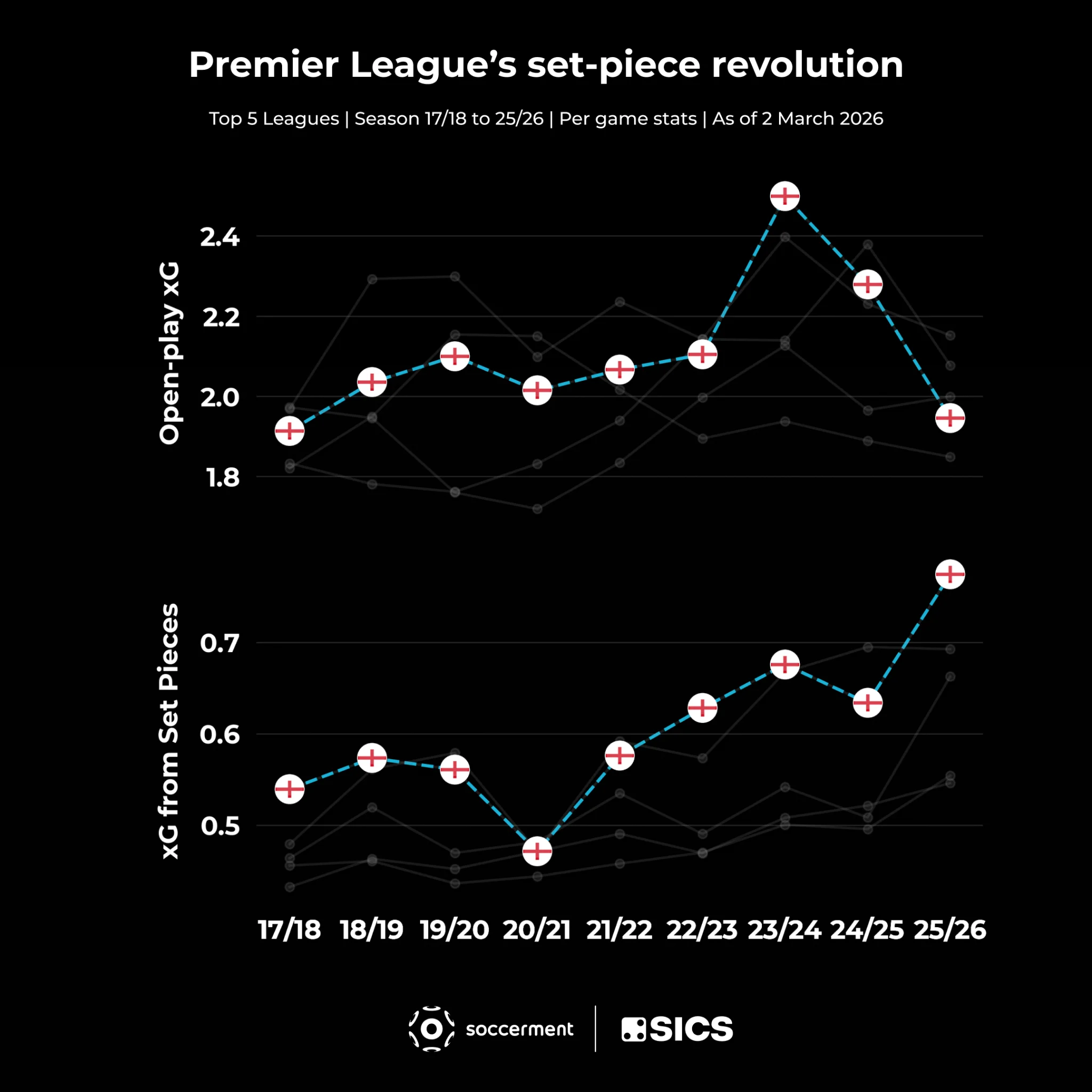
The basic facts show a clear shift: attacking production from set pieces has shot up in 2025/26 in the Premier League, reaching by far the highest xG per match measured in the top 5 European leagues in the last nine seasons. At the same time, open-play xG production has seen a sharp decline, down to the lowest level observed since 2017/18.
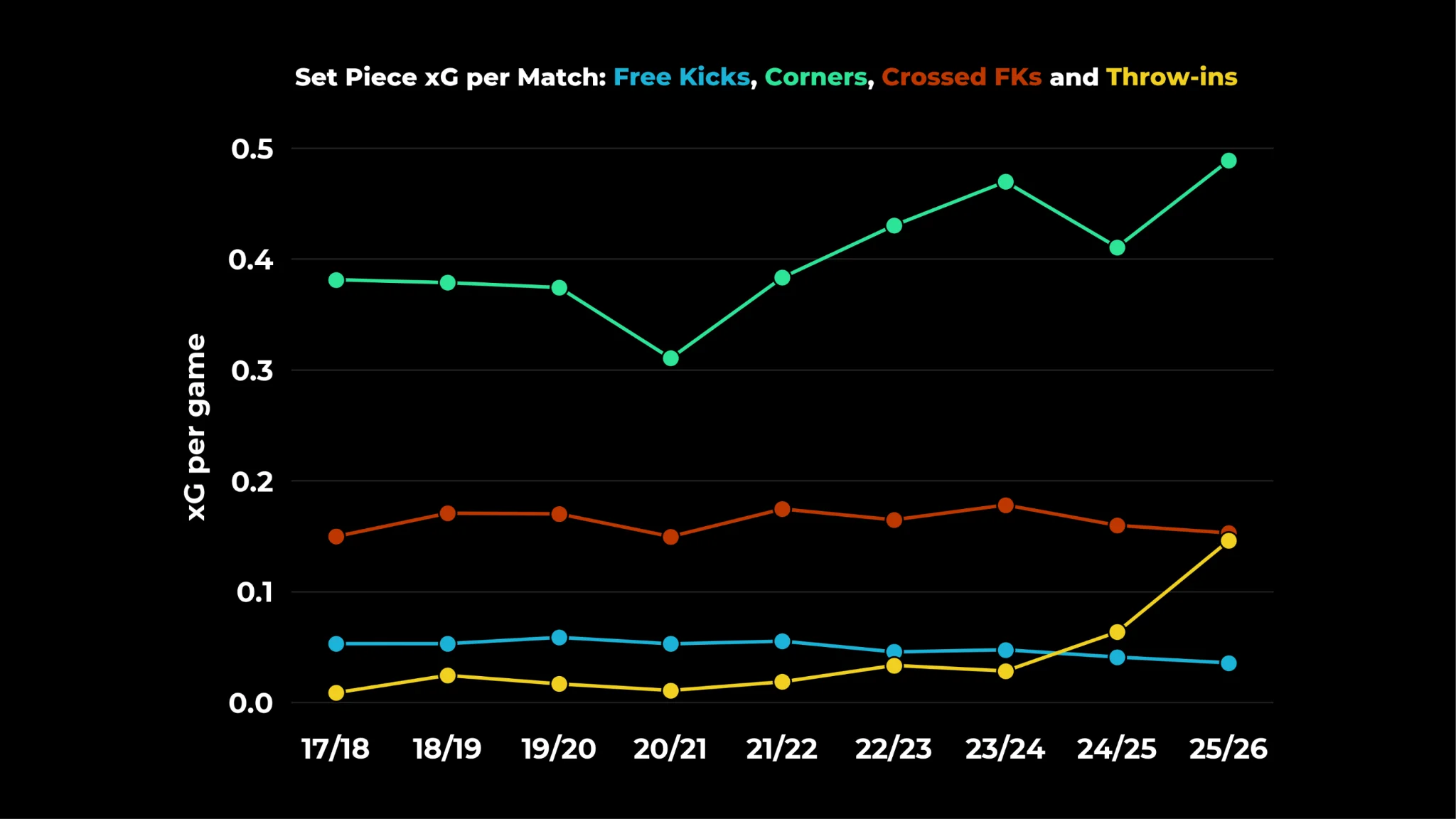
The increase in set piece production comes exclusively from corner kicks and throw-ins, while xG from free kicks (both direct and crossed) are flat. There’s one thing corner kicks and throw-ins have in common: there’s no offside in these situations. This allows teams to pack the penalty area with attacking players, and target them with the set piece delivery, as we will see. The rise in production is not accidental, but the result of marked tactical shifts, particularly in how teams approach corners and throw-ins.
The how: corners, the “meat wall” and long throw-ins
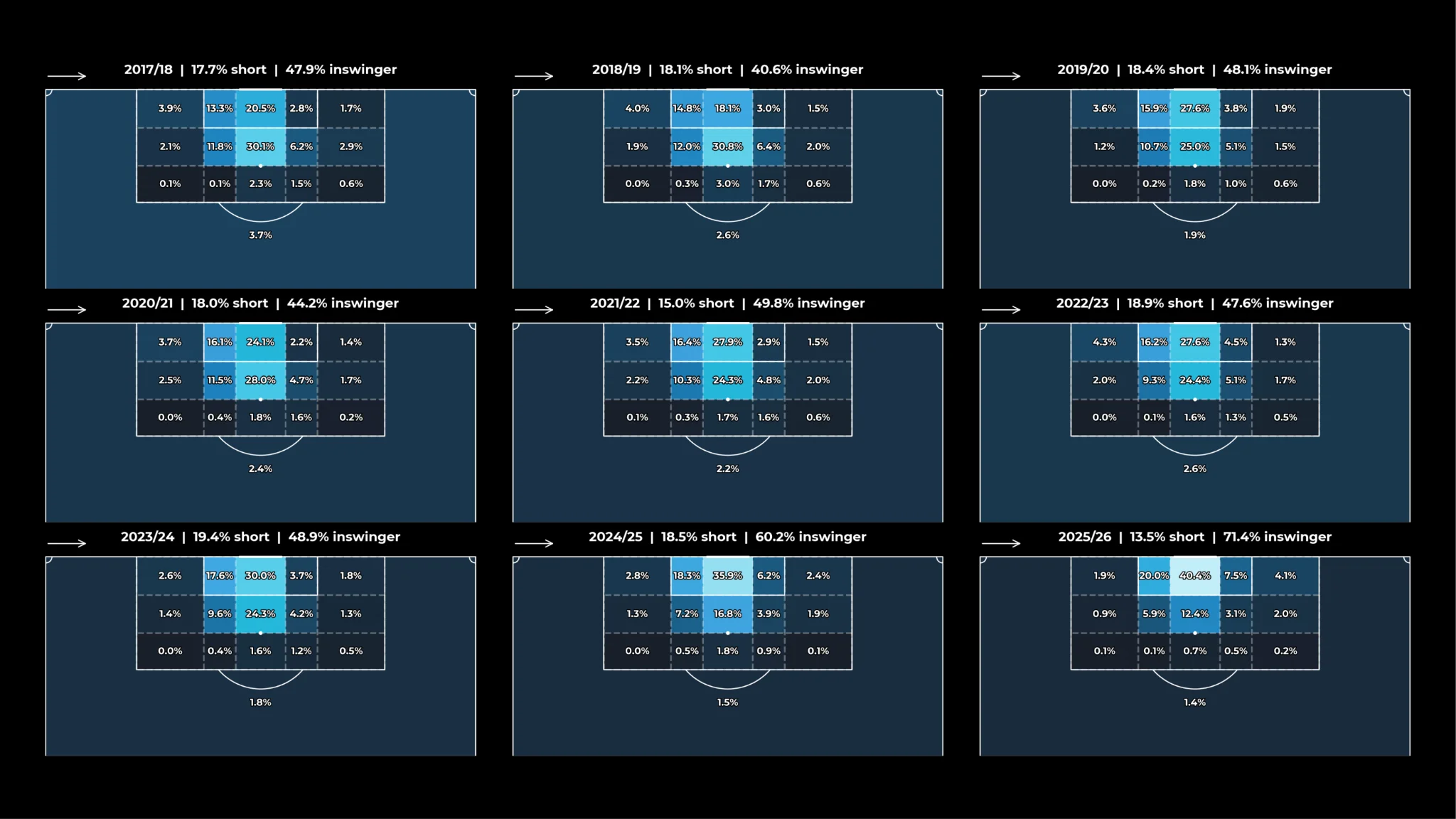
The strategy for corners has become more and more focused on in-swingers delivered into the central part of the six-yard box. While this might be expected to result in a higher rate of crosses claimed by the goalkeeper, teams are employing a counter-strategy: packing the six-yard box with their most physically dominant attacking players. This strategy, dubbed the “meat wall” by analyst Michael Caley, is effectively preventing the goalkeeper from intervening.
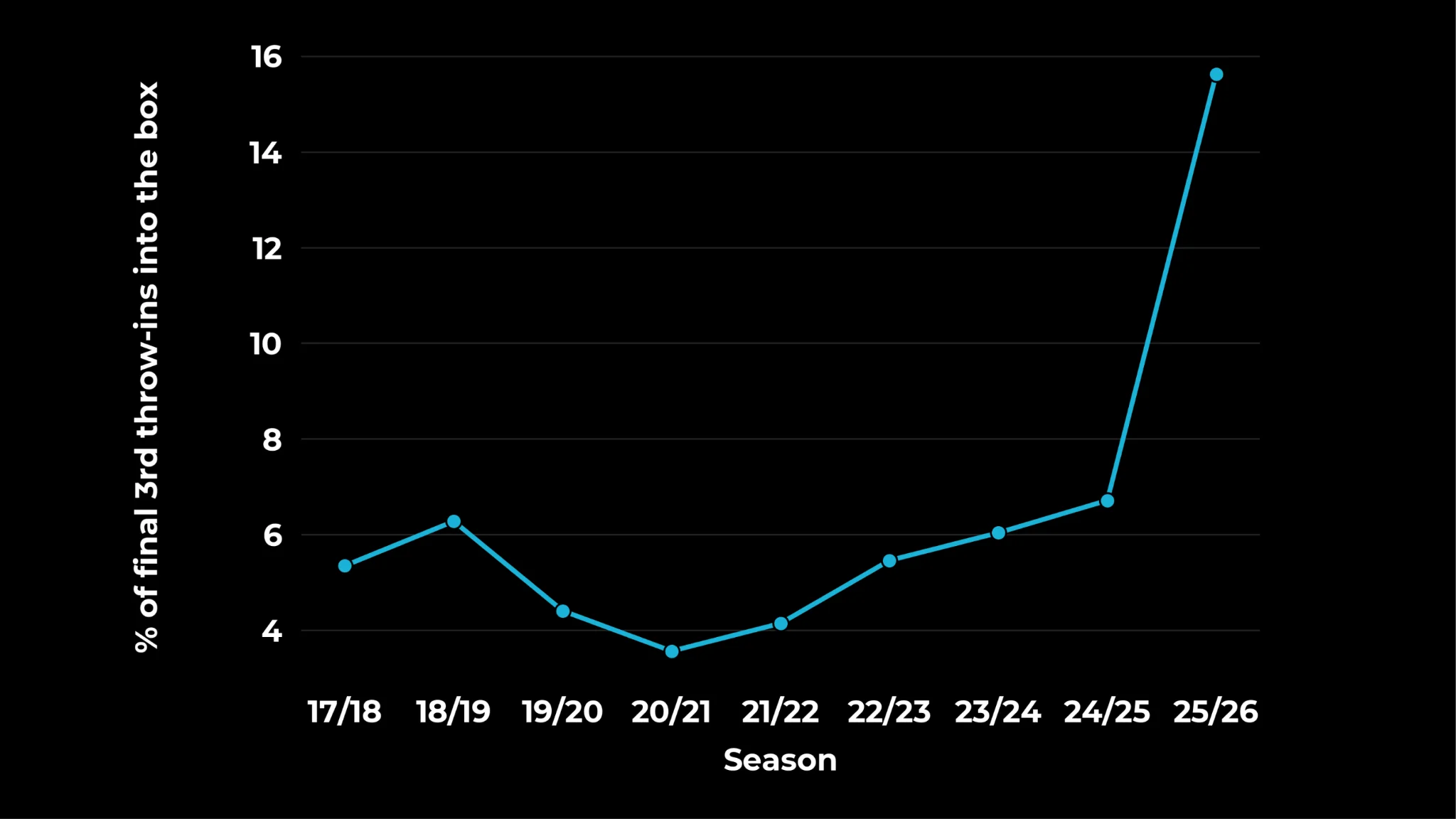
A similar, if somewhat less extreme strategy is being employed on attacking throw-ins. The percentage of final-third throw-ins being played directly into the opposition box has more than doubled in 2025/26 compared to the previous season.
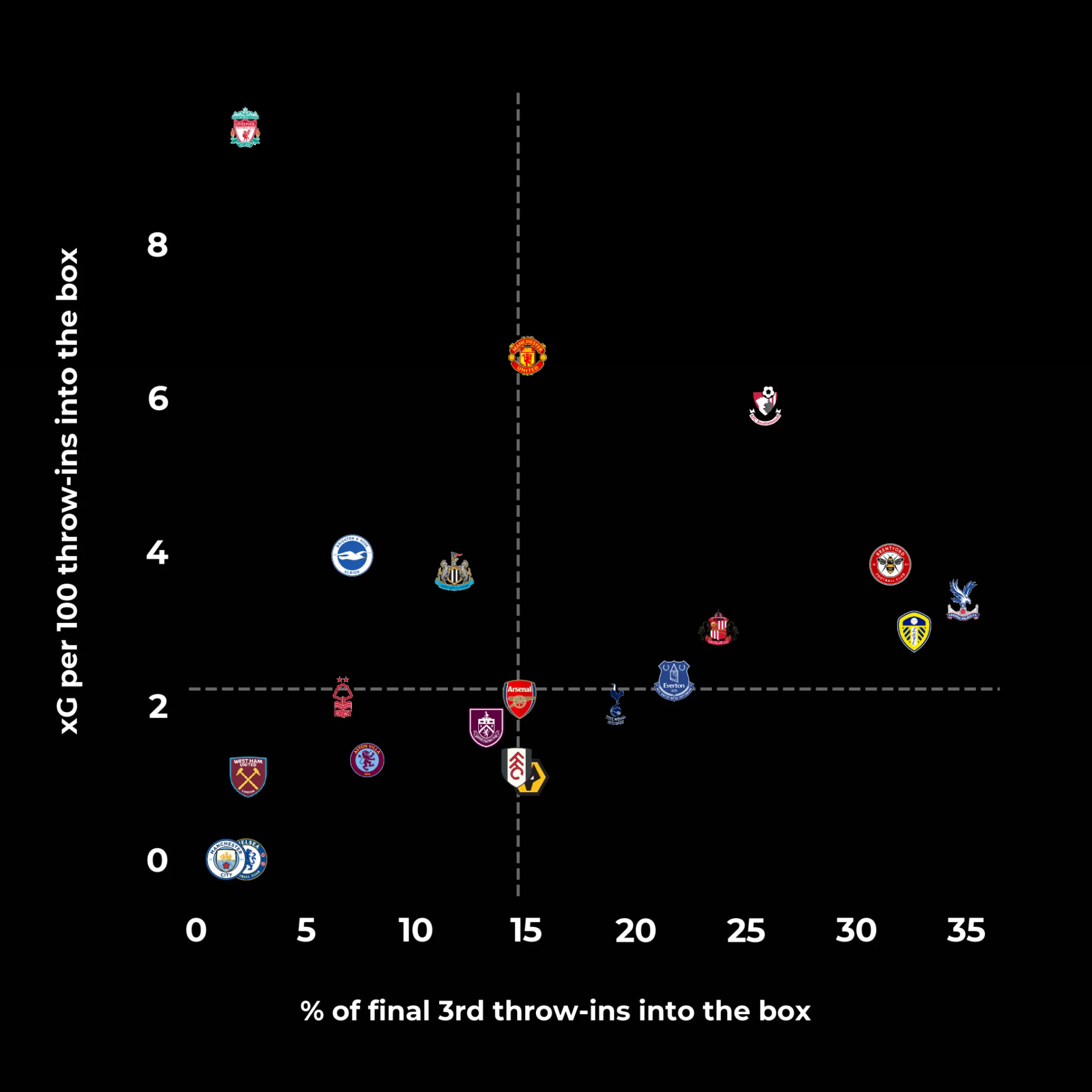
All the teams that employ this play more often than average also generate more xG from these situations on average, but the relation between the two is not necessarily straightforward.
Who’s dominating: team efficiency
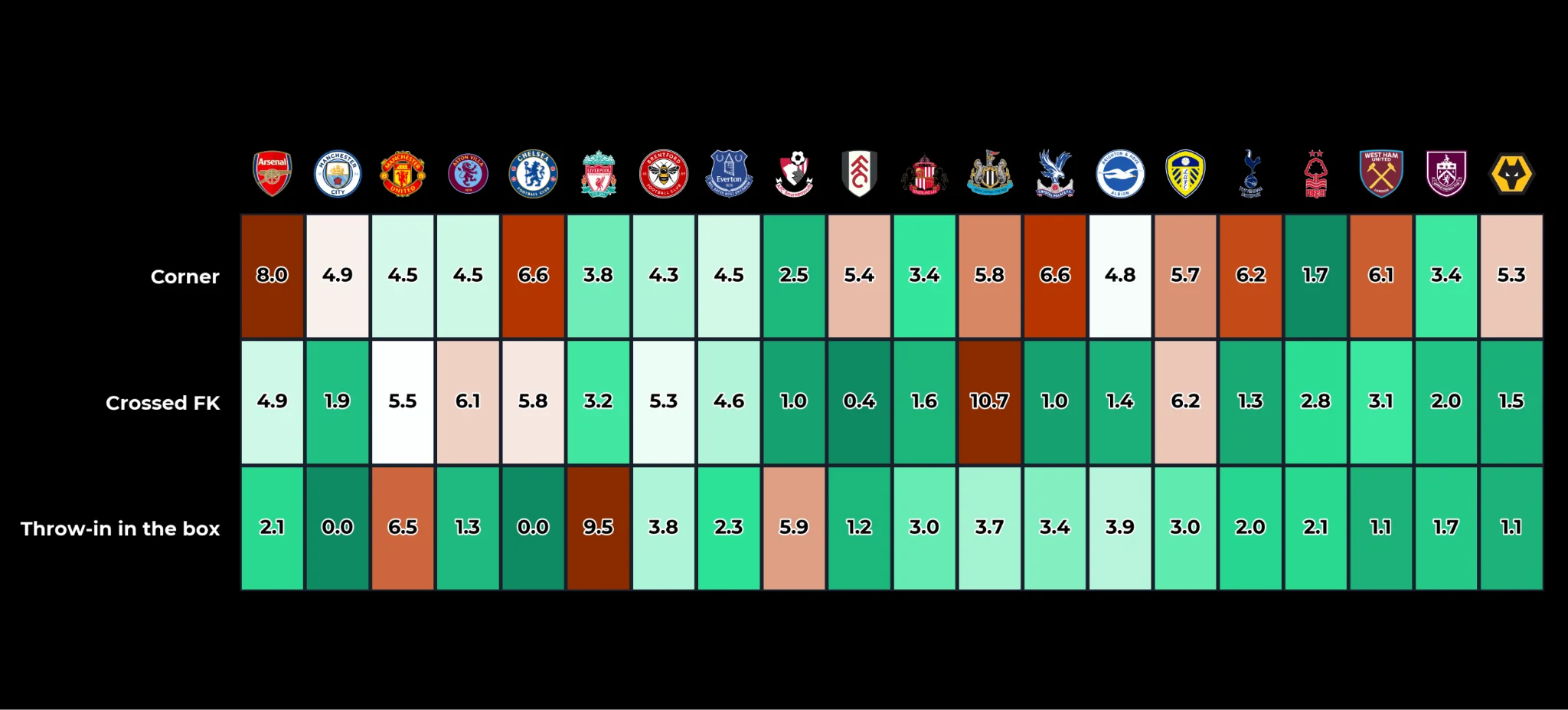
We measure a team’s set-piece efficiency by looking at the xG generated within 20 seconds from the set piece (cutting the window short if there is an interruption in play), normalized by the number of occurrences. By measuring the average xG created per 100 occurrences of each set piece, we can identify the most dangerous teams in the league:
- Corners: As expected, Arsenal are the most threatening team, followed by Chelsea and Crystal Palace.
- Crossed Free Kicks: Newcastle have by far the highest xG production on average, followed by Leeds and Aston Villa.
- Long Throw-ins: Liverpool are the most effective team when it comes to creating chances from long throw-ins into the box, followed by Bournemouth.
The Cost: Increased Interruption Time
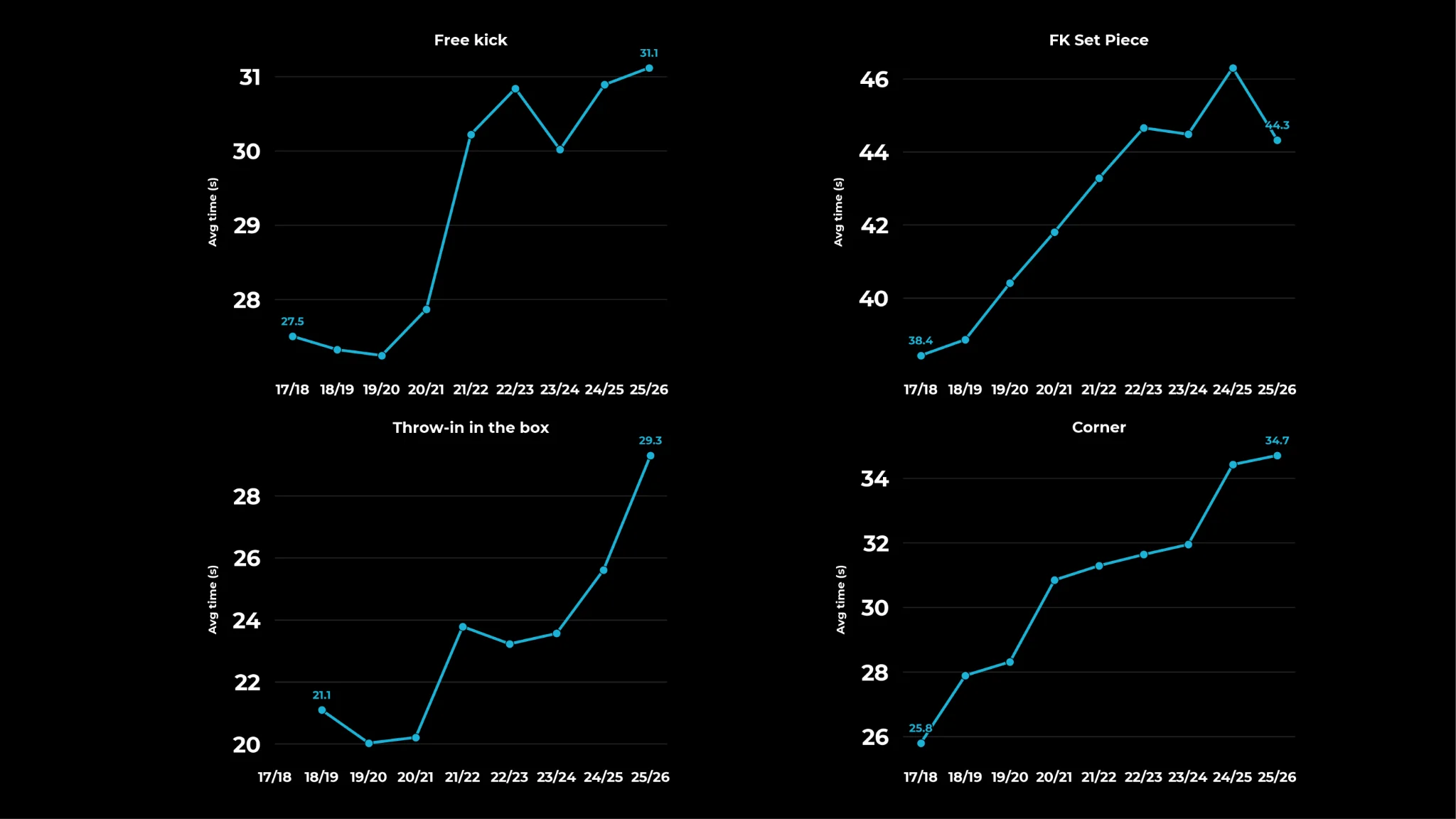
While these set-piece innovations are proving highly effective, they do not come without a trade-off. A consequence of the increased focus on more elaborate set pieces, which are based on bringing a higher number of attacking players into the box, has been an increase in the time taken to restart. The preparation for free kicks (both set piece FKs and regular), long throw-ins into the box, and crossed corners has gradually increased over the years. Long throw-ins into the box have seen the sharpest rise in restart time, as players need extra time to get into the box, often from their own half. This is compounded by longer preparation times, such as drying the ball with towels.
Regular (non-crossed) free kicks now take 31.1 seconds on average, set piece free kicks take 44.3 seconds, a throw-in into the box from the attacking third takes 29.3 seconds, and a corner takes 34.7 seconds.
Conclusion
The 2025/26 Premier League season marks a clear tactical inflection point in modern football. The combined rise in set-piece xG and decline in open-play xG confirms that teams are prioritizing planned, high-probability attacking scenarios over unstructured play. Tactics like the "meat wall" and the increased prevalence of direct throw-ins into the box are direct responses to a search for marginal gains, effectively exploiting the no-offside rule in these phases. While these innovations are making the game more effective in generating scoring opportunities, they come with the trade-off of increased delay and less continuous play. The question is whether this set-piece dominance will continue in the future, or if defensive strategies will evolve to negate them.